Our pick
Standard day cruise
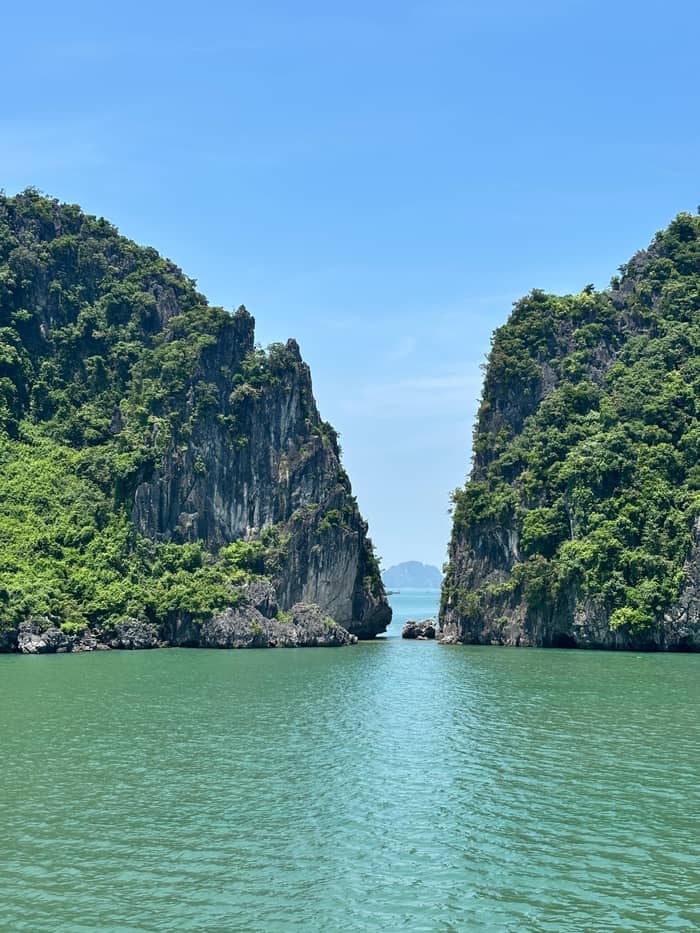
Sung Sot, Luon, Ti Top
- Stops3 caves and islands
- Reviews13,162
- From$40
Help me decide
Two questions, one bay
Say what you want from the bay and the day that fits appears with its starting price.
The one for you
from $40
A full day from Hanoi with Sung Sot Cave, Luon Cave and Ti Top Island, about 1 hour at each, and a seafood lunch on board.
The one for you
from $41
A day trip on a luxury cruise with a buffet lunch and a large jacuzzi, with the same cave, kayak and swim stops.
The one for you
from $38
A full-day boat tour of Lan Ha Bay with kayaking at Bright Cave, a swim at Ba Trai Dao beach and a sunset cooking class.
The one for you
from $22
A 9-hour tour from Cat Ba that mixes Lan Ha and Ha Long Bay with kayaking, snorkeling and a bike tour in the national park.
The one for you
from $48
A day tour from Tuan Chau that crosses to Lan Ha Bay and Cat Ba Island, with Trung Trang Cave, swimming and kayaking.
A plain explanation of the bay behind the day cruises: where it is, how the stone towers formed, why it is called the descending dragon and what each title on the list means.
Editorial team, halongbaydaytrip.click · Updated November 17, 2026 · Read in 8 min
Overview
Ha Long Bay is a stretch of sea in the north-east of Vietnam, in Quang Ninh province, and the Management Department puts it about 165 km from Hanoi.1 The same official page gives its area as 1,553 km2 and counts 1,969 islands, of which 980 have a name.1 Those numbers are why people call it a bay of thousands of islands: most of them are bare stone towers, and only a minority have ever been given a place on a map.
The islands are overwhelmingly limestone. The Management Department says over 90% of them are limestone, with heights from 50 to 200 m, and the rest are soil islands that carry plants and a few people.7 The seabed between them is shallow, with an average depth of 5 to 10 m and some channels reaching 15 to 29 m.8 That shallow floor is part of why the water looks so green from a deck, and why a boat can thread between the towers without a deep-sea crossing.
For a visitor the practical meaning is simple. Ha Long Bay is a place you see from the water, and the national tourism authority notes that the road from Hanoi takes about 2.5 hours by expressway to the cruise ports at Tuan Chau and Bai Chay.9 Everything else, the caves, the beaches, the floating villages, sits out on the bay and is reached by boat, which is why a day cruise is the usual first look.
Two ways to count
| Source | Area | Islands | What it covers |
|---|---|---|---|
| Management Department | 1,553 km21 | 1,969, of which 980 named1 | The bay in Quang Ninh province1 |
| UNESCO | 65,650 ha2 | 1,133 islands and islets2 | Quang Ninh and Hai Phong, with Cat Ba2 |
| Tourism authority | Not stated | Over 360 in Cat Ba19 | The Cat Ba Archipelago in Hai Phong20 |
The figures differ because the sources draw the boundary differently; compare them as sizes of different areas, not as errors.1,2
The landscape is a drowned limestone plateau. UNESCO calls the property the widest-ranging and best-known case of tower karst drowned by the sea, and one of the most important areas for the karst forms called fengcong and fenglin, which are clusters of cone-shaped peaks and isolated towers.14 In plain terms, rain and groundwater carved a mountain of limestone into pillars over a long time, and then the sea rose and filled the gaps between them.
The timescale is hard to picture. The Management Department puts the geological story of the area at about 3 billion years, with a scientific record that reaches back 500 million years.15 UNESCO adds that the caves in the bay are of three main types, the remnants of old water-filled caves, old caves at the foot of the karst and caves cut by the sea at the waterline.16 Each type leaves a different shape, which is why one stop on a cruise can feel nothing like the next.
Two caves show the range well. The Management Department describes Sung Sot Cave as the bay's largest cave known to date and Luon Cave as a passage that cuts right under a mountain.17,18 One is a big hall reached by a steep climb, the other is a passage you glide through on the water. Both are on the standard day-cruise route, so you meet the geology in person rather than from a diagram.
Counting islands
The Management Department counts 1,969 islands in 1,553 km2 and names 980 of them; UNESCO counts 1,133 islands and islets in a newer property that includes Cat Ba, which the tourism authority puts at over 360 islands.1,2,19
The name carries a story. The Management Department says Ha Long means Descending Dragon, and that the name had not been recorded in any document before the 19th century.3 Earlier names existed, but the one on the maps today arrived late, and it fits a legend that the Vietnamese tell about their own origins and that the bay seems to illustrate. Knowing the story makes the place easier to read from the boat.
The official retelling goes like this. Invaders came soon after the Vietnamese founded their country, so the Jade Emperor dispatched Mother Dragon with her young dragons to help.23 The dragons spat out pearls that turned into thousands of stone islands and islets rising from the sea like great walls in front of the invaders' boats.23 Seen from a deck at low sun, with the towers lined up in rows, the picture is easy to accept.
Legend also sits inside the caves. The national tourism authority passes on a story that Thien Cung Cave once housed the Dragon King and his wife May.24 Locals named many islets after the things they resemble. One set of rocks is called Fighting Cocks Island or Cock and Hen Island, two formations that jut more than 12 meters above the water and lean toward each other.25 Guides repeat these stories because they make a stone tower memorable.
Three ways to meet the bay
Our pick
Sung Sot, Luon, Ti Top
More comfort
Buffet lunch and jacuzzi
Fewer boats
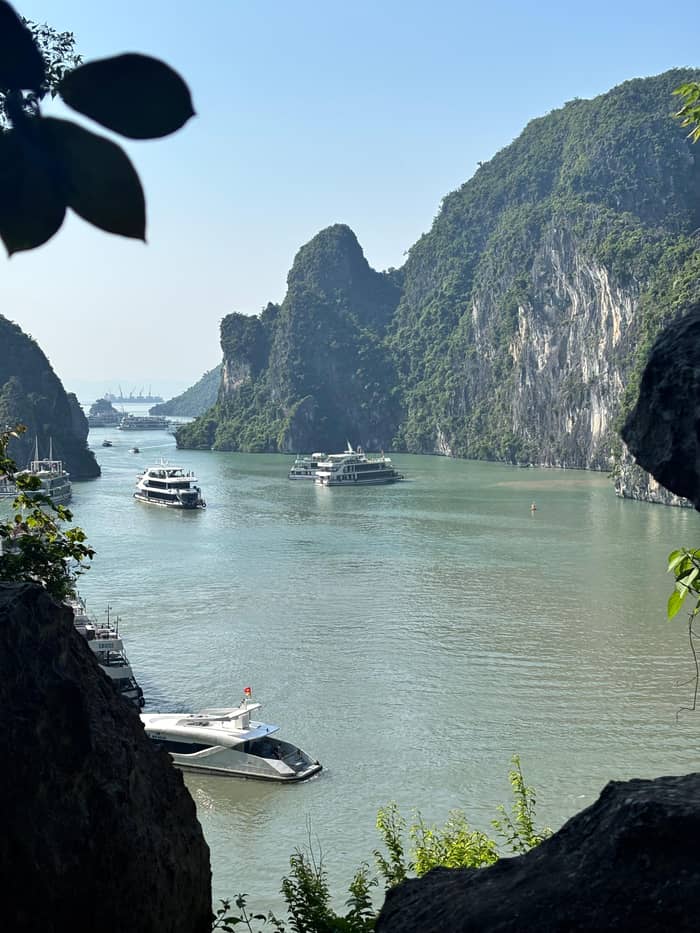
Quieter water by Cat Ba
People came here long before tourists did, and the record of that is on the rock. The Management Department records a prehistoric Soi Nhu culture that used the caves, and it dates the archaeological layer in Luon Cave to between 18,000 and 7,000 years ago.10 That means the bay was a place to live and to fish for a very long time, and the shell deposits in the caves are one of the ways scientists read the old climate.
The protection record starts in the 20th century. The Management Department says the bay was ranked a national landscape monument in 1962 and a Special National Monument on August 12, 2009.11,13 UNESCO gives the same national steps and adds that World Heritage recognition came in 1994 and again in 2000.26,21 The first inscription, on December 17, 1994 in Phuket, was for the aesthetic value of the landscape.4
The second recognition looked at the rock itself. On December 2, 2000, at a session in Cairns, the Committee recognized the bay for its geological and geomorphological values.12 The latest chapter came on September 16, 2023, when the Committee approved widening the boundary so that it takes in the Cat Ba Archipelago, in Hai Phong City.5 The national tourism authority notes that this made it Vietnam's first inter-provincial World Heritage site.27
Price a first look
Set your party and see what three ways to see the bay cost.
3 options compared
Set your party and see what three ways to see the bay cost.
≈
View≈
View≈
ViewStarting prices on GetYourGuide, exchanged at the ECB reference rate. The booking page gives the exact price.
Dates on the record
Early times
Luon Cave holds a layer from the Soi Nhu culture dated 18,000 to 7,000 years ago.10
First national step
The bay was ranked a national landscape monument in 1962.11
December 1994
The Committee inscribed the bay for its aesthetic values under criterion (vii).4
December 2000
The Committee recognized the geological and geomorphological values under criterion (viii).12
August 2009
The Vietnamese Government ranked the bay a Special National Monument.13
November 2011
A public poll named the bay among the new natural wonders.6
September 2023
The boundary was extended to include the Cat Ba Archipelago.5
Ha Long Bay is one of the places chosen as a new natural wonder, and it helps to know exactly what that means. VietnamPlus reports that on November 11, 2011 the bay was listed among the world's seven new natural wonders after a public poll.6 A formal ceremony followed in Hanoi on April 27, where the New7Wonders Foundation president presented a certificate and symbol to Vietnamese officials.28
That title is a popularity award. It came from a public vote, and it is separate from the heritage list. UNESCO inscribed the bay on its own criteria in 1994 and 2000, and its description speaks of landscape and geology rather than votes.21,14 So both claims are true at once: the bay is a World Heritage site by the judgment of a committee, and a new natural wonder by the result of a poll.
If you want the short version for a conversation, say the bay holds a World Heritage listing and a wonder title, and do not mix them up. The Management Department lists both on its own titles page, with the 2012 certificate event at My Dinh Stadium in Hanoi next to the UNESCO dates.29 Neither title changes what you see from the boat, which is the same limestone seascape either way.
Video
Hanoi Old Quarter Uncovered on YouTube · The video stays unloaded until you press play.
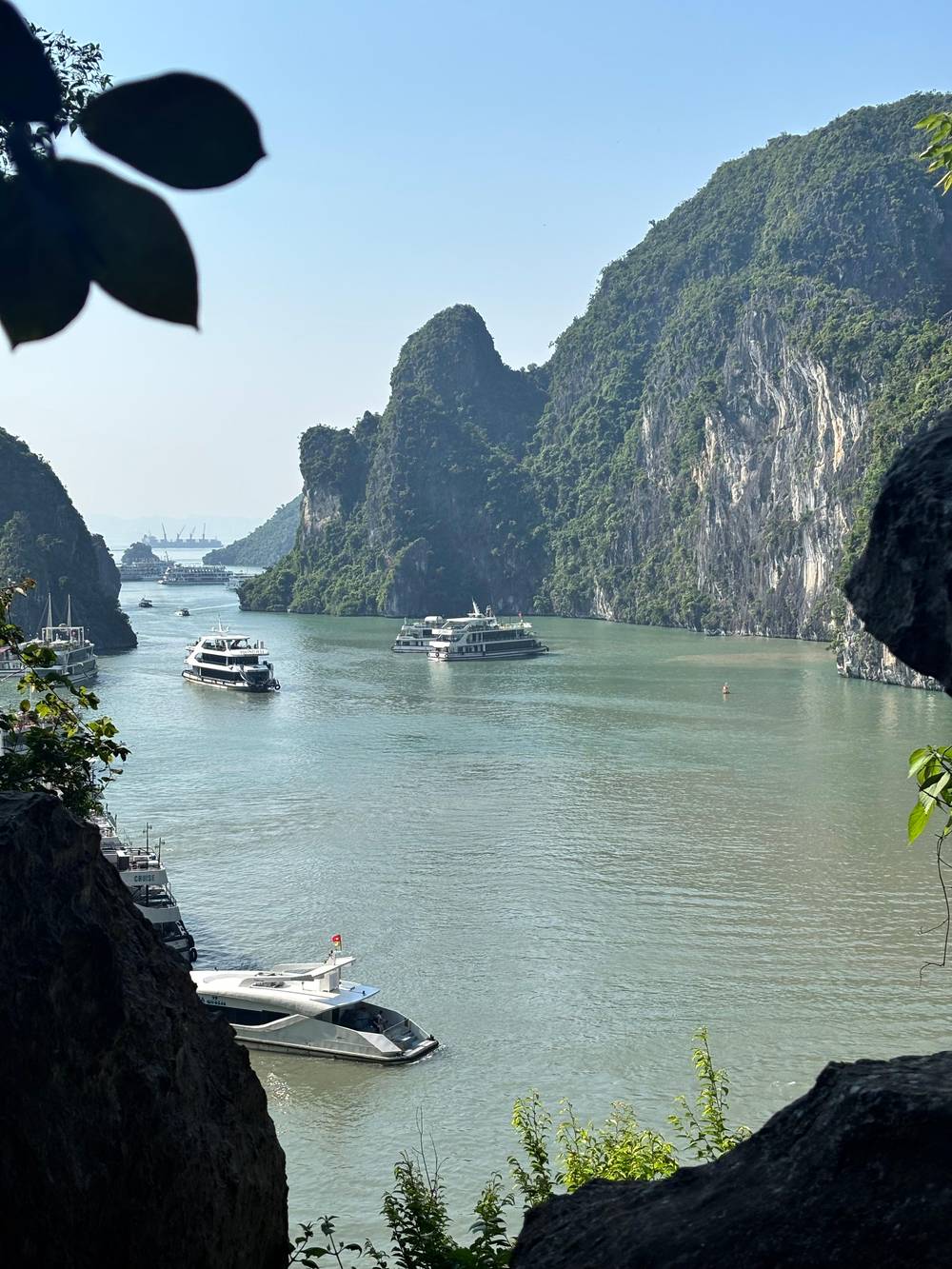
Ha Long Bay is a surreal landscape of limestone karsts erupting from the ocean like tidal waves made solid by magic and time.
Before you trust a number
The bay is also a living place. The Management Department reports nearly 3,000 plant and animal species recorded in the area, among them 507 land plants, 110 coral species, 156 fish species, 71 bird species and 53 mammal species.30 It groups them into 10 types of typical limestone-archipelago ecosystems, from island forest and caves to mangroves and coral reefs.31 Most visitors only see the surface, but the water under the hull is busy.
The newer, larger listing adds Cat Ba. The national tourism authority says the combined area shelters 4,910 species of plants and animals, 198 of them on the IUCN Red List.32 UNESCO names the Cat Ba Langur, a primate rated Critically Endangered, as the archipelago's flagship species and says tourism still disturbs its small population.33 The tourism authority puts the count at about 60-70 individuals, found only on Cat Ba.34
People live on the bay too. The national authority writes that fishing communities have lived on the water for centuries, and a boat tour around a floating village gives a glimpse of that way of life.35 The Management Department's Cua Van center shows the life and culture of those communities, and one cruise route is set up around it.36 It is a reminder that the postcard is also somebody's workplace and home.
A single day from Hanoi shows a good share of the places named above. Our featured cruise walks you through Sung Sot Cave, paddles you into Luon Cave by kayak or bamboo boat and lets you swim or climb for the view at Ti Top Island, with about an hour at each and sunset time on board. It is a full-day product with a live guide, priced from $40. That makes it a sensible way to meet the bay before you decide how much more time to give it.
Titop is the island with a story you can check. It was named in 1962, the Management Department says, when the Soviet cosmonaut Gherman Titov came with President Ho Chi Minh, and no other island in the bay carries a name chosen by the President.37 From the top, the department says, you see the whole bay, and the beach below has room to swim and play.38 The island sits on the same official route as Sung Sot and Luon, so a cruise that includes all of these stops follows a path the managers themselves list.39
Smaller landmarks fill the gaps between the big stops. The national authority says Dinh Huong Islet, shaped like an incense burner, appears on Vietnam's 200,000 VND banknote, and Oan Islet stands 22 meters tall and appeared in the French film L'Indochine.40,41,42 Look out for them from the deck, and ask the guide to point out which rock is which, because the names make more sense once you match a name to a silhouette.
FAQ
The Management Department places it in the north-east of Vietnam, about 165 km from Hanoi.1
The Management Department says Ha Long means Descending Dragon.3
The Committee approved the extension on September 16, 2023, in Riyadh.5
The bay covers 1,553 km2, so a day cruise samples a few stops.1
Sources
Continue reading
Planning a Ha Long Bay day from Hanoi? Ask a real person here.